Carpet can add comfort and style to your home, but measuring for stairs can be tricky. While professional installation is highly recommended for a flawless finish, knowing how to measure your staircase can help you get an accurate estimate and shop with confidence.
Understanding Your Staircase
First, let's go over the key parts of a stair:
- Tread: The horizontal part you step on. Most are about 10 inches deep.
- Riser: The vertical part at the back of the stair. These are typically 8 inches tall.
- Nose: The small overhang on the front of the tread that extends over the riser. If your stairs have this, you'll need to add an extra 3 inches to your measurements.
Types of Stairs and How to Measure
The way you measure depends on the type of staircase you have.
Box Stairs
This is the most common type, with a tread and a riser.
- Measure: The combined length of the tread and riser is usually 18 inches (10" + 8"). Multiply this by the width of your stairs (typically 36 inches). Then, multiply that total by the number of stairs you have. Don't forget, there is one more riser than there are treads, since the top of the stairs is the floor of the hallway.
Cap Stairs
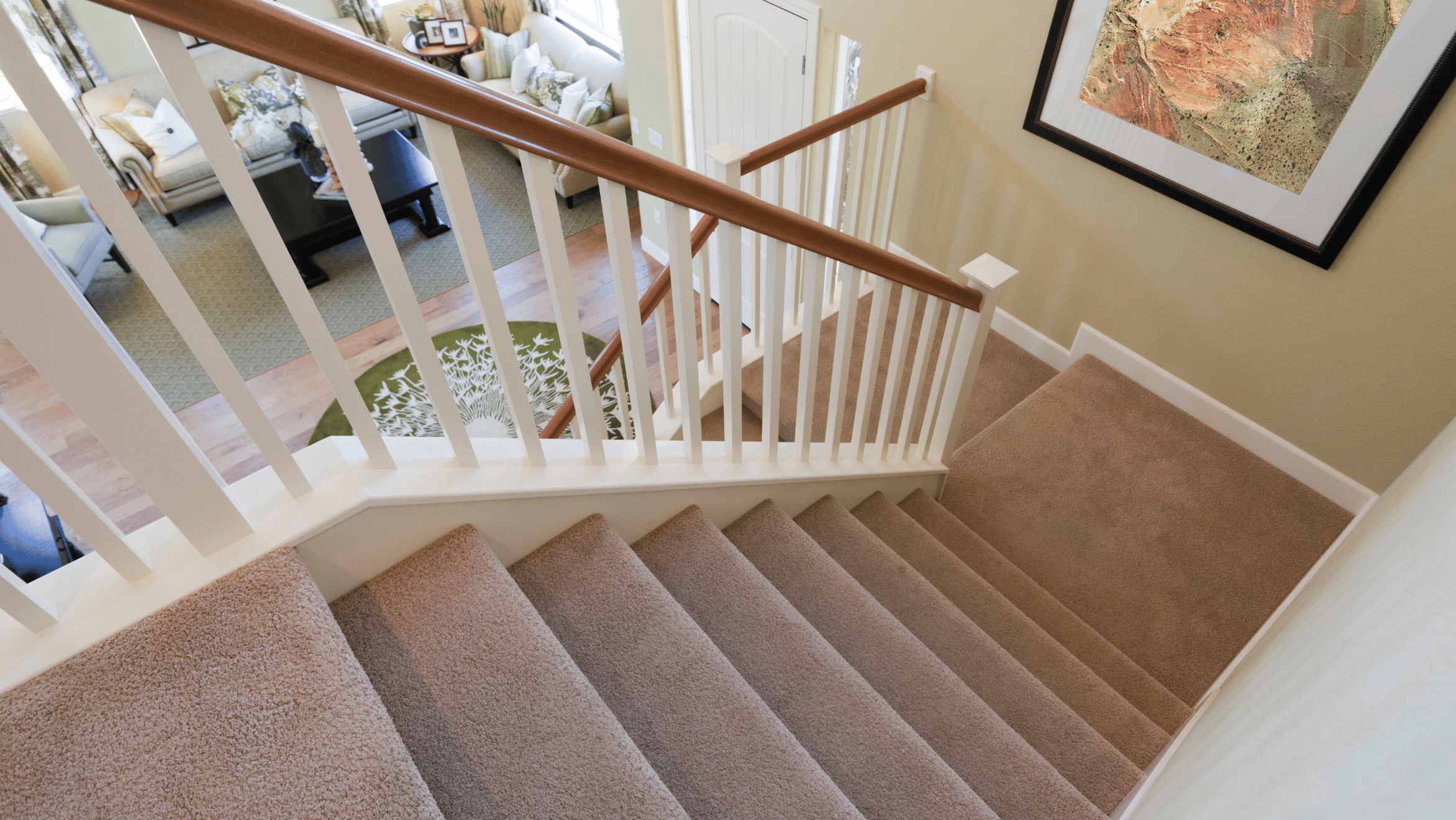
These stairs have one or both sides exposed, with railings.
- Measure: For each open side, you'll need to add about one foot of carpet width to wrap around the posts.
Pie Stairs (Winder Stairs)
These are triangular stairs used on corners, often found in older homes.
- Measure: Because of their unique shape, pie stairs are not measured individually. Instead, plan on a piece of carpet that is 48" x 30" for each winder to allow the installer to work with the grain of the carpet for a perfect fit.
Open Stairs (Hollywood Stairs)
These stairs have no backing. They are often uncarpeted, but if you do want to cover them, you’ll need enough material to wrap around the entire step.
- Measure: You’ll need a combined tread and riser measurement of at least 20 inches, plus two times the height of the step to ensure you can wrap the carpet all the way around.
Bullnose Stairs
Typically found at the bottom of a staircase, these stairs are wider and have rounded edges.
- Measure: The tread and riser are the same as your other stairs, but the width will be wider. Measure the widest part and add a few extra inches to wrap around the outer edge.
Putting It All Together
Once you have your measurements, you can calculate the total square footage you'll need. Always add an extra 10% to your final number. This gives your installer room to make cuts and adjustments without coming up short.
Example Calculation:Let's say you have 15 cap stairs with a nose on a staircase that turns at a corner with three pie stairs.
- Pie Stairs: 3 pieces x (48" x 30") = 4,320 square inches
- Cap Stairs: 12 stairs x (48" width x 21" total length [10" tread + 8" riser + 3" nose]) = 12,096 square inches
- Total: 4,320 + 12,096 = 16,416 square inches
- Convert to Square Feet: 16,416 / 144 = 114 square feet
- Add 10%: 114 x 1.10 = 125.4 square feet
As you can see, a few extra stairs and different styles can drastically increase the amount of carpet you need. Having these measurements ready will make shopping easier and ensure you get an accurate quote for your project.

.png)
.png)
.png)